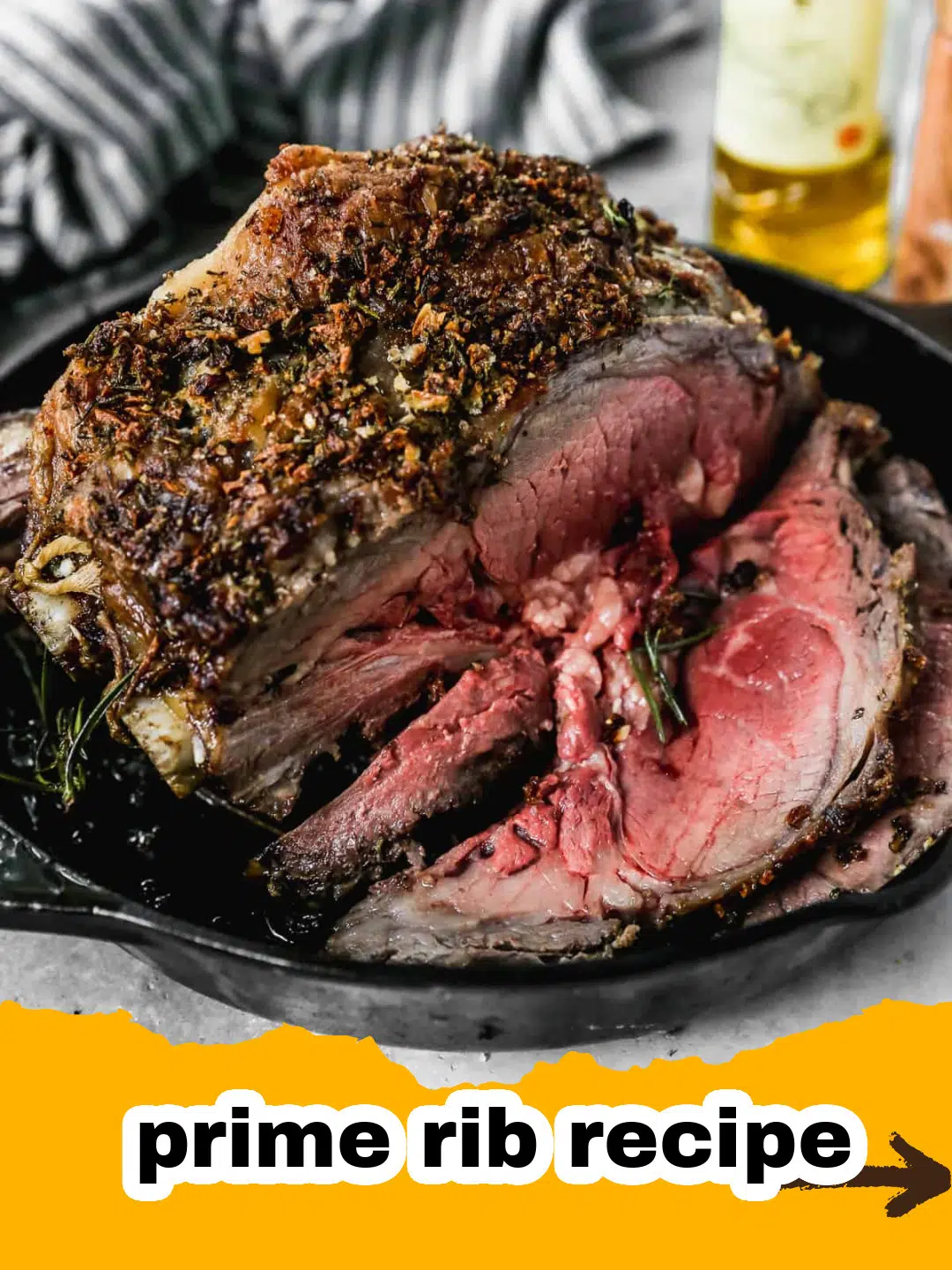
There are some dishes that transcend mere meals and become etched in your memory, moments that define celebrations and gather loved ones around a table. For me, that dish has always been the perfect prime rib recipe. I remember my grandfather, a man of few words but immense culinary talent, preparing his legendary standing rib roast every Christmas. The aroma would fill the house, a rich symphony of roasting beef, garlic, and herbs that promised something truly special. As a child, I’d peek into the oven, mesmerized by the golden-brown crust forming, anticipating that first succulent slice. It wasn't just about the food; it was about the ritual, the anticipation, the shared joy. That feeling of warmth, comfort, and celebration is what I strive to recreate with every prime rib recipe I prepare, and today, I'm sharing the culmination of years of perfecting that tradition with you.
Why This Prime Rib Recipe is a Must-Try
- Unbeatable Flavor Profile: This prime rib recipe emphasizes a robust herb crust that locks in juices and creates an explosion of savory flavor with every bite.
- Perfectly Cooked Every Time: We utilize a reverse-sear method to achieve a beautiful, evenly rosy interior from edge to edge, with a spectacular caramelized crust. No more gray edges!
- Impressive for Any Occasion: Whether it's a holiday feast, a special anniversary, or just a desire to treat yourself, this prime rib recipe delivers an unforgettable centerpiece that will awe your guests.
- Simpler Than You Think: Despite its luxurious reputation, our step-by-step guide breaks down the process, making this prime rib recipe approachable for home cooks of all levels.
Key Ingredient Notes
Crafting the perfect prime rib recipe starts with understanding your ingredients. While the method is crucial, the quality of what you put in makes all the difference.
Bone-In Rib Roast
Choosing the right cut of meat is paramount for any prime rib recipe. Opt for a bone-in rib roast (also known as a standing rib roast) with at least 2-3 ribs, preferably 3-4 for a medium-sized gathering. The bones add incredible flavor and act as a natural rack, protecting the meat during cooking. Look for good marbling – those tiny flecks of fat distributed throughout the meat – which will melt during roasting, keeping your prime rib incredibly tender and juicy. Freshness is key, so buy from a reputable butcher if possible.
High-Quality Seasonings (Kosher Salt, Freshly Ground Black Pepper, Garlic Powder)
While the beef is the star, the seasoning sets the stage. Don't skimp on kosher salt; it's essential for drawing out moisture and creating that beautiful crust. Freshly ground black pepper adds a layer of sharp, earthy flavor that complements the richness of the beef. Garlic powder is used here for its ability to evenly distribute garlic flavor without the risk of burning that fresh minced garlic sometimes poses during a long roast. These simple seasonings are the foundation of a great prime rib recipe.
Fresh Herbs (Rosemary and Thyme)
Fresh herbs elevate this prime rib recipe from good to extraordinary. Rosemary offers a pungent, piney aroma and flavor that pairs perfectly with beef, while thyme provides a more delicate, earthy, and slightly floral note. Using them fresh ensures their essential oils are at their peak, infusing the roast with aromatic complexity. Finely chop them to create a uniform crust that adheres beautifully to the meat.
Step-by-Step Guide with Pro Tips
Mastering the prime rib recipe involves a few key steps. Follow these instructions closely, and you'll be rewarded with an astonishingly delicious roast.
Pro Tip: Always allow your prime rib to come to room temperature before roasting. This promotes even cooking and reduces overall cook time.
Preparing Your Prime Rib
- Step 1: At least 2-3 hours before roasting (or up to 24 hours for deeper seasoning), remove the prime rib from the refrigerator. Pat it thoroughly dry with paper towels.
- Step 2: If your butcher hasn't already done so, carefully score the fat cap in a crosshatch pattern, being careful not to cut into the meat. This helps the fat render and creates more surface area for the herb crust.
- Step 3: In a small bowl, combine the kosher salt, freshly ground black pepper, garlic powder, finely chopped fresh rosemary, and fresh thyme. Mix well to create your herb rub for this prime rib recipe.
- Step 4: Generously rub the herb mixture all over the prime rib, pressing it firmly into the fat cap and all sides of the meat. Don't be shy – this forms your delicious crust. Place the seasoned roast on a rack set inside a large roasting pan. Let it sit at room temperature for 2-3 hours.
The Roasting Process (Reverse Sear Method)
- Step 5: Preheat your oven to 250°F (120°C). This low and slow approach is key to an evenly cooked prime rib recipe.
- Step 6: Insert an oven-safe meat thermometer into the thickest part of the prime rib, avoiding the bone. Place the roasting pan with the prime rib in the preheated oven.
- Step 7: Roast for approximately 2-3 hours, or until the internal temperature reaches about 115-120°F (46-49°C) for rare, 120-125°F (49-52°C) for medium-rare, or 125-130°F (52-54°C) for medium. Cooking time will vary depending on the size and shape of your roast. This slow roasting is what makes this prime rib recipe so tender.
- Step 8: Once the desired internal temperature is reached, remove the prime rib from the oven. Transfer it to a cutting board and tent loosely with foil. Increase the oven temperature to 450°F (232°C). While the oven preheats, you can prepare the best homemade au jus using the pan drippings.
- Step 9: Once the oven is fully preheated to 450°F, return the prime rib to the roasting pan. Roast for an additional 10-15 minutes, or until a beautiful, deep brown crust forms. Watch it closely to prevent burning. This final sear is crucial for the texture of our prime rib recipe.
Resting and Serving
- Step 10: Remove the prime rib from the oven and transfer it back to the cutting board. Tent it loosely with foil again and let it rest for at least 20-30 minutes, or even up to 45 minutes for larger roasts. This resting period is absolutely critical for a juicy prime rib recipe, allowing the juices to redistribute throughout the meat.
- Step 11: Carve the prime rib by carefully separating the meat from the bones. Then slice against the grain into desired thickness. Serve immediately with your favorite sides, such as perfect Yorkshire puddings and a rich au jus. Any leftovers can be stored in an airtight container, like these Basics Glass Food Storage containers, for up to 3-4 days. This ensures your delicious prime rib recipe can be enjoyed again.
Variations & Serving Suggestions
This prime rib recipe is fantastic on its own, but a few twists can make it even more personalized:
- Garlic & Herb Butter Rub: Instead of just a dry rub, mix softened butter with minced garlic, fresh rosemary, thyme, salt, and pepper. Rub this mixture under the fat cap and all over the roast for an even richer flavor. This takes your prime rib recipe to the next level.
- Mustard & Herb Crust: Spread a thin layer of Dijon mustard over the prime rib before applying the herb rub. The mustard adds a tangy depth and helps create an even more pronounced crust.
- Smoked Prime Rib: If you have a smoker, you can adapt this prime rib recipe by smoking it at a low temperature (around 225-250°F) until it reaches the desired internal temperature, then finishing with a high-heat sear in the oven or on a grill.
- Serving Suggestions: Beyond classic Yorkshire pudding and au jus, consider creamy mashed potatoes, roasted asparagus, sautéed green beans, or a crisp winter salad. For an extra touch of decadence, serve with a horseradish cream sauce. This prime rib recipe pairs wonderfully with a robust red wine.
Nutrition Information
| Nutrient | Amount per Serving |
|---|---|
| Serving Size | 4 oz (approx. 113g) |
| Calories | 350 kcal |
| Fat Content | 28g |
| Saturated Fat Content | 12g |
| Trans Fat Content | 1g |
| Unsaturated Fat Content | 15g |
| Cholesterol Content | 95mg |
| Sodium Content | 480mg |
| Carbohydrate Content | 0g |
| Fiber Content | 0g |
| Sugar Content | 0g |
| Protein Content | 24g |
*Nutritional information is an estimate based on ingredients and cooking methods, and may vary.
Conclusion
This prime rib recipe is more than just a meal; it's an experience, a tradition waiting to be made. The tender, juicy meat, infused with aromatic herbs and boasting a magnificent crust, will undoubtedly be the highlight of any gathering. Don't be intimidated by its grandeur – with our detailed guide and pro tips, you'll achieve perfection every time. So go ahead, embrace the joy of cooking, gather your loved ones, and create memories around a truly spectacular prime rib. Enjoy!
FAQs
What is the best way to cook a prime rib recipe for a perfect medium-rare?
For a perfect medium-rare prime rib recipe, we recommend the reverse-sear method. Roast at a low temperature (250u00b0F) until the internal temperature reaches 120-125u00b0F, then remove, tent with foil, and increase oven temperature to 450u00b0F. Finish with a high-heat sear for 10-15 minutes until a beautiful crust forms. Always rest for 20-30 minutes after searing.
How much prime rib recipe do I need per person?
As a general rule for a prime rib recipe, plan for about 1/2 to 3/4 pound of bone-in roast per person. If you want leftovers or have big eaters, lean towards 1 pound per person. For a boneless roast, consider 1/2 pound per person.
Is it better to cook a prime rib recipe with the bone in or boneless?
Cooking a prime rib recipe with the bone in is generally preferred. The bones add flavor to the roast and act as a natural rack, protecting the meat during cooking. While a boneless roast is easier to carve, many chefs agree that the bone-in version yields a more flavorful and juicy result.
How do I make a good au jus for my prime rib recipe?
To make a good au jus for your prime rib recipe, collect the drippings from the roasting pan. Skim off excess fat, then deglaze the pan with beef broth or red wine, scraping up any browned bits. Simmer for a few minutes, season to taste, and strain if desired for a smoother consistency. A dedicated au jus recipe provides even more depth.
Perfectly Roasted Prime Rib with Herb Crust
- Total Time: 3 hours
- Yield: 8-10 servings 1x
Description
This ultimate prime rib recipe utilizes a reverse-sear method to achieve a succulent, evenly cooked interior with a gorgeous, flavorful herb crust. Ideal for holidays and special occasions.
Ingredients
1 (4-6 lb) bone-in prime rib roast (2-3 ribs)
3 tablespoons kosher salt
1 tablespoon freshly ground black pepper
1 tablespoon garlic powder
2 tablespoons fresh rosemary, finely chopped
1 tablespoon fresh thyme, finely chopped
Instructions
Step 1: At least 2-3 hours before roasting, remove the prime rib from the refrigerator and pat it thoroughly dry with paper towels. Allow it to come to room temperature.
Step 2: If not already done, carefully score the fat cap of the prime rib in a crosshatch pattern, being careful not to cut into the meat. This helps the fat render during cooking.
Step 3: In a small bowl, combine the kosher salt, freshly ground black pepper, garlic powder, finely chopped fresh rosemary, and fresh thyme. Mix well to create the herb rub.
Step 4: Generously rub the herb mixture all over the prime rib, pressing it firmly into the fat cap and all sides of the meat. Place the seasoned roast on a rack set inside a large roasting pan.
Step 5: Preheat your oven to 250°F (120°C).
Step 6: Insert an oven-safe meat thermometer into the thickest part of the prime rib, avoiding the bone. Place the roasting pan with the prime rib in the preheated oven.
Step 7: Roast for approximately 2-3 hours, or until the internal temperature reaches 120-125°F (49-52°C) for medium-rare. Adjust for your desired doneness (115-120°F for rare, 125-130°F for medium).
Step 8: Once the desired internal temperature is reached, remove the prime rib from the oven and transfer it to a cutting board. Tent loosely with foil. Increase the oven temperature to 450°F (232°C).
Step 9: Once the oven is fully preheated, return the prime rib to the roasting pan. Roast for an additional 10-15 minutes, or until a beautiful, deep brown crust forms. Watch closely to prevent burning.
Step 10: Remove the prime rib from the oven and transfer it back to the cutting board. Tent it loosely with foil and let it rest for at least 20-30 minutes. This is crucial for juicy results.
Step 11: Carve the prime rib by carefully separating the meat from the bones, then slice against the grain into desired thickness. Serve immediately with your favorite sides and au jus.
Notes
For best results, invest in a good meat thermometer. Adjust resting time for larger roasts. The internal temperature will rise by 5-10°F during resting. Always carve against the grain for maximum tenderness.
- Prep Time: 30 minutes
- Cook Time: 2 hours 30 minutes
- Category: Main Course
- Cuisine: American
Nutrition
- Serving Size: 4 oz (approx. 113g)
- Calories: 350 kcal
- Sugar: 0g
- Sodium: 480mg
- Fat: 28g
- Saturated Fat: 12g
- Unsaturated Fat: 15g
- Trans Fat: 1g
- Carbohydrates: 0g
- Fiber: 0g
- Protein: 24g
- Cholesterol: 95mg
Leave a Reply