Ah, the prime rib roast recipe. Just uttering those words brings back a flood of cherished memories. I remember my first attempt at cooking a prime rib for a big family gathering. It was Christmas Eve, and I, a young and overly ambitious cook, decided it was time to step up from casseroles. I’d seen my grandmother effortlessly transform humble ingredients into a feast, but a massive roast felt like climbing Mount Everest in a chef’s hat. The fear of overcooking this expensive cut, of disappointing a table full of expectant faces, was palpable. I spent hours poring over cookbooks, internet forums, and even called my grandma for her 'secret touch.' The kitchen was a flurry of activity, filled with the aroma of herbs and the anxious hum of the oven. When it finally emerged, golden brown and glistening, and I sliced into that perfectly pink, juicy center, a collective gasp of appreciation filled the room. That moment, seeing everyone enjoy the fruits of my labor, solidified my love for cooking and for this magnificent dish. Since then, perfecting the prime rib roast recipe has become a yearly tradition, a culinary pilgrimage that always delivers.
Why This Prime Rib Roast Recipe is a Must-Try
- Unbeatable Flavor & Tenderness: This method ensures a perfectly cooked interior, bursting with rich beefy flavor and melt-in-your-mouth tenderness.
- Impressive Centerpiece: A prime rib roast is truly a showstopper, making any special occasion feel even more luxurious and memorable.
- Simpler Than It Looks: Don't be intimidated! With the right techniques, this prime rib roast recipe is straightforward and accessible for home cooks.
- Perfect for Gatherings: Generously serves a crowd, making it ideal for holiday dinners, anniversaries, or any celebratory meal.
Key Ingredient Notes for Your Prime Rib Roast Recipe
The beauty of a perfect prime rib roast recipe lies in starting with quality ingredients and treating them with respect. Here are a few key components:
The Prime Rib Itself
Choosing the right roast is paramount. Look for a bone-in standing rib roast (it will be labeled as such at the butcher counter). Bone-in offers more flavor and helps insulate the meat, leading to a more evenly cooked roast. As for grading, USDA Prime or Choice is your best bet for exceptional marbling and tenderness. A good rule of thumb is to plan for one rib bone per two people; a three-bone roast will typically feed 6-8 people. When you bring it home, allow it to sit at room temperature for at least 2-3 hours before cooking. This crucial step helps the roast cook more evenly from edge to center. This is a fundamental step for any successful prime rib roast recipe.
Fresh Herbs: Rosemary & Thyme
These classic herbs are the prime rib's best friends. Fresh rosemary and thyme infuse the roast with an earthy, aromatic perfume that complements the rich beef beautifully. Don't shy away from using a generous amount. Mince them finely and combine them with crushed garlic to create a fragrant paste that will form a delicious crust. This aromatic blend is what elevates a simple piece of meat into an extraordinary prime rib roast recipe.
Coarse Salt & Freshly Ground Black Pepper
These two humble seasonings are critical. Coarse salt, like kosher salt or sea salt, creates a fantastic crust and draws out the meat's natural flavors. Freshly ground black pepper adds a pungent warmth. Season generously! Remember, this is a large cut of meat, and it can handle a good amount of seasoning. A well-seasoned exterior is key to achieving that desirable crust on your prime rib roast recipe.
Step-by-Step Guide with Pro Tips for the Perfect Prime Rib Roast Recipe
Mastering this prime rib roast recipe is all about technique and patience. Follow these steps for a perfectly cooked, show-stopping roast.
Prep the Roast
Step 1: Remove your prime rib from the refrigerator at least 2-3 hours before cooking to allow it to come to room temperature. Pat it thoroughly dry with paper towels – a dry surface is crucial for a good sear. This step is non-negotiable for a truly great prime rib roast recipe.
Season Generously
Step 2: In a small bowl, combine minced garlic, fresh minced rosemary, fresh minced thyme, a generous amount of coarse kosher salt, and freshly ground black pepper. Rub this mixture all over the entire surface of the prime rib, ensuring it's evenly coated. For an extra layer of flavor and to aid in searing, you can also spread a thin layer of Dijon mustard or olive oil over the roast before applying the herb mixture.
The Sear (Optional, but Highly Recommended)
Step 3: Preheat a large, heavy-bottomed oven-safe skillet (like cast iron) over high heat until it's smoking hot. Add a tablespoon of high-smoke point oil (like avocado or grapeseed oil). Carefully place the prime rib in the hot skillet and sear on all sides for 2-3 minutes per side, until a beautiful golden-brown crust forms. This step locks in juices and develops incredible flavor. If your roast is too large for a skillet, you can achieve a similar effect by roasting at 450-500°F (230-260°C) for the first 15-20 minutes in your oven before reducing the temperature.
Slow Roasting
Step 4: Transfer the seared prime rib, bone-side down, to a roasting pan fitted with a rack. If you didn't sear, simply place it directly on the rack. Insert an oven-safe meat thermometer into the thickest part of the roast, avoiding the bone. Roast in a preheated oven at 250°F (120°C) until it reaches your desired internal temperature. This low-and-slow method is key to a tender, evenly cooked prime rib roast recipe.
- For Rare: 115-120°F (46-49°C)
- For Medium-Rare: 120-125°F (49-52°C)
- For Medium: 125-130°F (52-54°C)
The Critical Rest
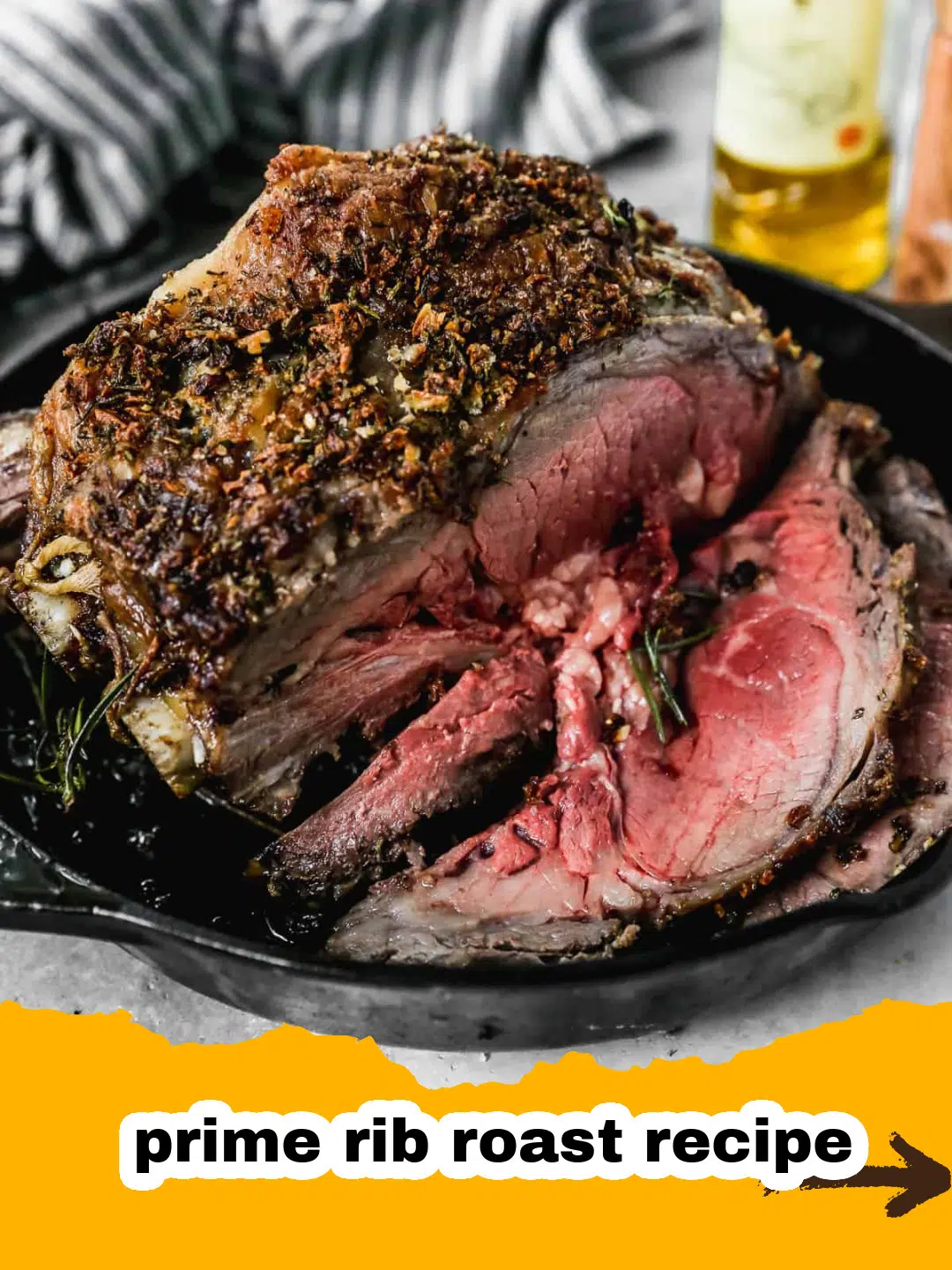
Step 5: Once the roast reaches your desired temperature, remove it from the oven. Tent it loosely with foil and let it rest on a cutting board for at least 30-45 minutes (even up to an hour for larger roasts). This resting period is CRUCIAL! It allows the juices to redistribute throughout the meat, resulting in a tender, moist, and incredibly flavorful prime rib roast. Skipping this step will result in dry, less enjoyable meat, regardless of how perfectly it was cooked. During this time, the internal temperature will also rise by another 5-10 degrees, known as carry-over cooking.
Carving and Serving
Step 6: After resting, transfer the prime rib to a sturdy cutting board. Using a sharp carving knife, slice along the bones to remove the roast from the rib rack. Then, slice the roast against the grain into desired thickness (usually 1/2 to 3/4 inch). Serve immediately with any accumulated pan juices or a classic homemade Au Jus. This prime rib roast recipe is designed for serving perfection.
Save the Bones!
Step 7: Don't discard those bones! They are packed with flavor and can be used to make a rich beef stock for soups, sauces, or even another batch of Au Jus. Store them in a freezer bag until you're ready to use them.
Variations & Serving Suggestions for Your Prime Rib Roast Recipe
This classic prime rib roast recipe is fantastic on its own, but here are some ideas to make it even more special:
Herb Crust Variations
Experiment with different herb blends. Try adding finely chopped fresh sage, oregano, or even a touch of smoked paprika to the garlic and herb rub. For a truly decadent crust, mix softened butter with the herbs before slathering it over the roast. Some like to add a horseradish paste to the exterior for a zesty kick.
Perfect Pairings
- Yorkshire Puddings: A traditional and incredibly delicious accompaniment. The pan drippings from your prime rib are perfect for making these light, airy delights. Find our ultimate guide here: The Ultimate Guide to Perfect Yorkshire Puddings.
- Creamy Horseradish Sauce: A staple alongside prime rib. Mix grated horseradish with sour cream, a squeeze of lemon juice, and a pinch of salt and pepper.
- Roasted Vegetables: Asparagus, green beans, or Brussels sprouts tossed with olive oil, salt, and pepper make a great side. Root vegetables like potatoes, carrots, and parsnips roasted with the prime rib can absorb some of those incredible flavors.
- Loaded Mashed Potatoes: A comforting and hearty side that perfectly complements the richness of the beef.
Leftover Brilliance
If you're lucky enough to have leftovers from your prime rib roast recipe, they are truly a gift! Thinly sliced prime rib makes incredible sandwiches (hot or cold), gourmet tacos, or even a fancy beef and barley soup. Store any leftovers in an airtight container, like these durable Basics Glass Food Storage containers, for up to 3-4 days in the refrigerator. Reheat gently to avoid drying out the meat.
Nutrition Information
| Nutrient | Amount Per Serving |
|---|---|
| Calories | 550 kcal |
| Carbohydrate Content | 2g |
| Cholesterol Content | 180mg |
| Fat Content | 45g |
| Fiber Content | 1g |
| Protein Content | 35g |
| Saturated Fat Content | 18g |
| Serving Size | 1 slice (approx. 4oz cooked) |
| Sodium Content | 450mg |
| Sugar Content | 0g |
| Trans Fat Content | 2g |
| Unsaturated Fat Content | 22g |
Conclusion
Cooking a prime rib roast recipe is more than just making a meal; it's about creating an experience, a memory that will linger long after the last slice is savored. While it might seem daunting, with this detailed guide and a little confidence, you're well on your way to crafting a truly spectacular dish. Whether for a holiday feast or a special gathering, this ultimate prime rib roast recipe promises to deliver a succulent, flavorful, and unforgettable centerpiece. So gather your ingredients, set the table, and prepare to impress everyone with your culinary prowess. Happy roasting!
FAQs
How much prime rib do I need per person?
As a general rule, plan for about 1/2 pound (8 ounces) of bone-in prime rib per person. For a more generous serving or if you want leftovers, aim for 3/4 to 1 pound per person. A 3-rib roast typically feeds 6-8 people.
What temperature should prime rib be cooked to?
For rare, remove at 115-120u00b0F. For medium-rare, remove at 120-125u00b0F. For medium, remove at 125-130u00b0F. Remember that the temperature will rise by 5-10 degrees during the resting period due to carry-over cooking, so pull it out of the oven a bit before your final desired doneness.
Can I prepare prime rib ahead of time?
While you can season the prime rib up to 24 hours in advance, it's best to cook it on the day of your event for optimal taste and texture. However, allowing it to sit at room temperature for 2-3 hours before cooking is highly recommended and can be done slightly ahead of when you plan to put it in the oven.
What is the best way to reheat leftover prime rib?
To reheat leftover prime rib without drying it out, slice it thinly and warm gently in a pan with a little beef broth or gravy over low heat. Alternatively, you can place slices in an oven-safe dish with a splash of broth, cover with foil, and warm in a 250u00b0F (120u00b0C) oven until just heated through, about 10-15 minutes.
The Ultimate Juicy & Tender Prime Rib Roast
- Total Time: 3 hours 30 minutes - 4 hours 30 minutes
- Yield: 8-10 servings 1x
Description
A foolproof prime rib roast recipe resulting in a perfectly cooked, tender, and incredibly flavorful centerpiece for any special occasion. This guide ensures a golden crust and a juicy, pink interior every time.
Ingredients
1 (6-8 pound) bone-in prime rib roast (3-4 ribs)
6-8 cloves garlic, minced
2 tablespoons fresh rosemary, minced
2 tablespoons fresh thyme, minced
2 tablespoons coarse kosher salt
1 tablespoon freshly ground black pepper
1 tablespoon olive oil or high-smoke point oil (for searing, optional)
Instructions
Step 1: Remove your prime rib from the refrigerator at least 2-3 hours before cooking to allow it to come to room temperature. Pat it thoroughly dry with paper towels.
Step 2: In a small bowl, combine minced garlic, fresh minced rosemary, fresh minced thyme, coarse kosher salt, and freshly ground black pepper. Rub this mixture all over the entire surface of the prime rib, ensuring it's evenly coated.
Step 3: (Optional Searing) Preheat a large, heavy-bottomed oven-safe skillet over high heat until smoking hot. Add olive oil. Carefully place the prime rib in the skillet and sear on all sides for 2-3 minutes per side, until a beautiful golden-brown crust forms.
Step 4: Transfer the seared (or unseared) prime rib, bone-side down, to a roasting pan fitted with a rack. Insert an oven-safe meat thermometer into the thickest part of the roast, avoiding the bone. Roast in a preheated oven at 250°F (120°C) until it reaches your desired internal temperature (e.g., 120-125°F for medium-rare).
Step 5: Once the roast reaches your desired temperature, remove it from the oven. Tent it loosely with foil and let it rest on a cutting board for at least 30-45 minutes. This allows the juices to redistribute and for carry-over cooking to occur.
Step 6: After resting, transfer the prime rib to a sturdy cutting board. Using a sharp carving knife, slice along the bones to remove the roast from the rib rack.
Step 7: Slice the roast against the grain into desired thickness. Serve immediately with any accumulated pan juices or homemade Au Jus.
Notes
Always use a reliable meat thermometer for accurate doneness. The resting period after cooking is crucial for a juicy roast.
- Prep Time: 30 minutes
- Cook Time: 3 hours 30 minutes
- Category: Main Course
- Cuisine: American
Nutrition
- Serving Size: 1 slice (approx. 4oz cooked)
- Calories: 550 kcal
- Sugar: 0g
- Sodium: 450mg
- Fat: 45g
- Saturated Fat: 18g
- Unsaturated Fat: 22g
- Trans Fat: 2g
- Carbohydrates: 2g
- Fiber: 1g
- Protein: 35g
- Cholesterol: 180mg
Leave a Reply